

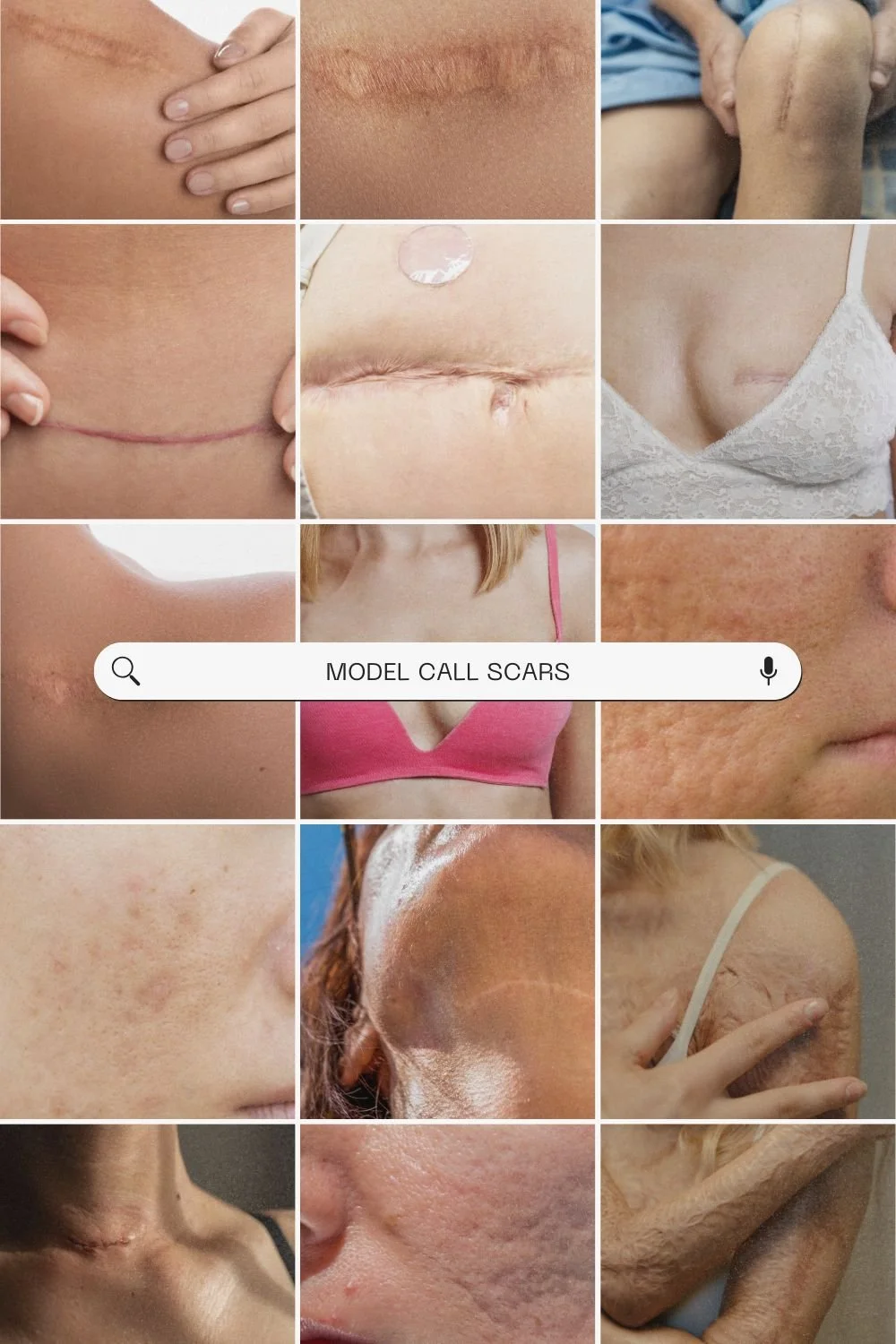
Type of Scars
It All Begins Here
Scars form when the skin repairs itself after injury, surgery, acne, burns or other trauma. Different kinds of scars look and feel different and respond to different treatments. Below are common scar types explained in plain language, what causes them, how they usually look, and typical treatment options offered at SELY MED INK & BODY STUDIO.
Atrophic (Depressed) Scars
What they are: Scars that sit below the surrounding skin surface—sunken or pitted.
Common causes: Acne, chickenpox, surgical wounds that healed with tissue loss.
How they look: Small or broad indentations, sometimes with sharp edges (ice pick) or wider, shallow depressions (boxcar, rolling).
Treatment options: Focused Medical Micro-needling FMM* SELY EXCLUSIVE, dermal fillers, subcision (breaking tethering bands), CO₂ or fractional lasers, chemical peels, and combined approaches for best results.
Hypertrophic Scars
What they are: Thick, raised scars that stay within the boundary of the original wound.
Common causes: Deep cuts, surgical incisions, wound tension during healing.
How they look: Red or pink, raised and sometimes itchy; can soften and flatten over time.
Treatment options: Focused Medical Micro-needling- FMM* SELY EXCLUSIVE, Steroid injections, silicone sheets or gels, laser therapy, radiofrequency skin tightening, and microneedling. Scar revision procedures can improve contour and texture.
Keloid Scars (must be treated with steroid injections first)
What they are: Overgrown scars that extend beyond the original injury into surrounding skin.
Common causes: Strong genetic tendency; can follow piercings, acne, surgery, or small injuries.
How they look: Firm, raised, sometimes nodular growths; may be darker than surrounding skin and can be itchy or painful.
Treatment options: Steroid injections, cryotherapy, laser, pressure therapy, and careful surgical removal combined with post-op treatments to reduce recurrence. Keloids can be stubborn and may require ongoing care.
Contracture Scars
What they are: Scars that tighten the skin, limiting movement, often formed after burns.
Common causes: Deep burns or large-area skin loss.
How they look: Tight, shiny skin that restricts joint or tissue movement; may distort nearby features.
Treatment options: Non-Surgical release using NUE Regen serum and needling to help soften healed traumatized tissue/ contracted scars that are tight, skin grafting, physical therapy.
Stretch Marks (Striae)
What they are: A type of scar from rapid skin stretching that damages collagen and elastin.
Common causes: Pregnancy, rapid weight gain or growth spurts, bodybuilding.
How they look: Initially red, purple or dark lines that fade to silvery or pale streaks over time.
Treatment options: Inkless StretchMark Regeneration, Medical Microneedling, fractional lasers, radiofrequency treatments, topical retinoids (where appropriate), and combined therapies to improve texture and colour.
Acne Scars (special category)
What they are: Can be atrophic (ice pick, boxcar, rolling) or hypertrophic/keloidal depending on the person and severity of inflammation.
Common causes: Moderate to severe acne, especially when picked or popped.
How they look: Mixture of pits, depressed areas, or raised bumps; often uneven texture.
Treatment options: Tailored combination of SELY EXCLUSIVE- Focused Medical Micro-needling *FMM. Multiple sessions are usually needed.
How scar treatment is chosen
Scar age, type, location, skin tone, and your medical history all matter.
Older scars may respond differently than fresh scars.
Darker skin tones require careful selection of treatments to lower the risk of pigment changes. May require more sessions as we cannot overwork skin and cause PIH.
Often a combination of treatments gives the best result—e.g., Sely Exclusive FMM* Focused Medical Microneedling, Traditional microneedling plus radiofrequency and topical care.
What to expect from realistic results
Scars rarely disappear completely; the goal is improvement in appearance, texture, colour and sometimes function. This is the camouflage effect that Sely Med Ink specializes on.
Multiple sessions may be needed to achieve the best possible outcome and result. Inked sessions lasts for years with proper skin care ie use of sunblock at least 50 SPF.
We assess scars in person to recommend a personalised plan and estimate likely improvement.
To better support you and your goal, Fill our contact form and book your complimentary virtual consult, leave in comments. we can review photos of your scar(s) to suggest options and a treatment plan. Please provide clear, well-lit pictures taken from a few angles (a close-up and a view showing location on the body) and tell us how long you’ve had the scar, any prior treatments, and any medical conditions or medications.
Note: For serious concerns (infected wounds, rapidly growing lumps, or unexplained changes in a scar), see a medical professional promptly.
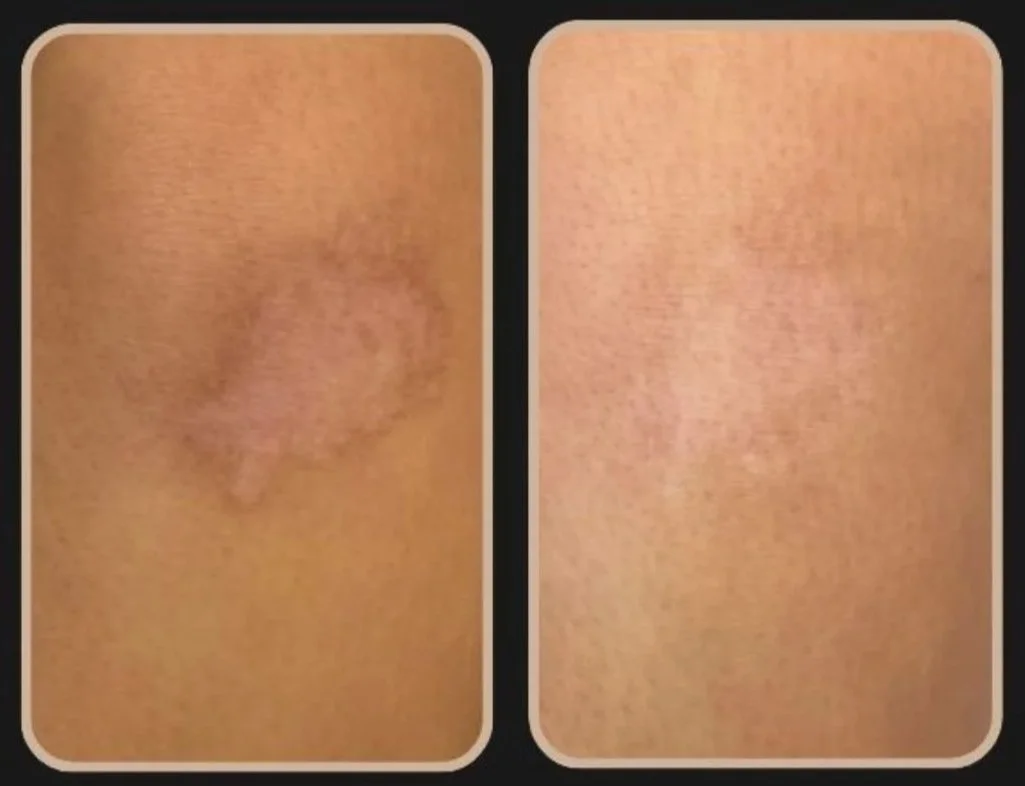
Dark Scar
It All Begins Here
Dark scar neutralization is a targeted approach to reduce the visibility of dark or hyperpigmented scars by both lightening the discolouration and visually balancing the treated area with surrounding skin. At SELY MED INK & BODY STUDIO we practice paramedical tattoo- depigmenting—using NUE Bright serum—with pigment-based neutralization (ink) to achieve a more even and natural appearance.
How it works
Depigmentation with NUE Bright serum: NUE Bright contains active ingredients that inhibit excess melanin production, promote epidermal turnover, and support gradual fading of darker pigmentation. Applied pre- and post-procedure, the serum reduces the intensity of the brown or grey tones in the scar tissue, improving the skin’s receptivity to neutralizing pigments and helping results last longer.
Neutralizing with ink: Once pigmentation has been lightened and the scar surface is stable, a specialised neutralizing ink (colour-correcting pigment) is applied into the scarred area to visually blend the tone with surrounding skin. The ink is selected and layered to counteract residual undertones—cooler pigments to offset warm brown, warm tones to reduce grey/ashy appearance—so the scar reads less noticeable at normal viewing distance.
Combined effect: The serum addresses the biological cause (excess melanin and slow turnover) while the ink provides immediate optical correction. Together they create a smoother colour transition and a more natural-looking result than either method alone.
Why this is a good option
Dual-action: Treats both the cause (hyperpigmentation) and the appearance (colour mismatch), increasing the chance of a satisfying outcome.
Faster visual improvement: Neutralizing ink offers an immediate cosmetic improvement while the serum continues to fade pigmentation over time.
Customisable: Pigment selection and layering can be tailored to skin tone, scar depth, and residual undertones for a personalised match.
Minimally invasive alternative: For many clients, serum-plus-ink neutralization can reduce the need for more aggressive procedures such as full surgical revision or repeated ablative resurfacing.
Longer-lasting results when combined: Using depigmenting serum before and after ink neutralization helps reduce re-pigmentation, supporting more durable blending.
Suitable for a range of scars: Works well for post-acne marks, surgical scars, and some trauma-related hyperpigmentation where texture issues are minimal or have been addressed separately (for example with Sely Med Inkless Skin Regen)
Considerations and limitations
Not a texture fix: Dark scar neutralization primarily addresses colour; raised, indented, or fibrotic texture often requires additional treatments (scar revision with sely med ink skin regen, microneedling).
Multiple sessions: Optimal fading and colour matching commonly need several sessions of serum use and possibly touch-ups of pigment.
Colour matching skill required: Success depends on accurate pigment selection and application by an experienced practitioner to avoid overcorrection or mismatched tones.
Healing and aftercare: Proper preconditioning with serum, sun protection, and post-care are essential to prevent relapse of pigmentation.
Skin tone variability: Darker skin tones may require a more conservative approach and careful monitoring to minimise risk of further hyper- or hypo-pigmentation.
Who is a good candidate
Clients with discoloured scars where texture has been stabilised or is acceptable.
People seeking a less invasive, cosmetically focused improvement.
Clients willing to commit to pre- and post-procedure care and follow-up touch-ups.
Typical protocol overview
Assessment and patch test to determine suitability and pigment match.
Pre-conditioning: NUE Bright serum use for several weeks to reduce pigment intensity and stabilise the area.
Neutralization session: Careful application of neutralizing ink into the scar area by a trained professional.
Aftercare: Strict sun protection, and scheduled touch-ups if needed.
At SELY MED INK & BODY STUDIO we tailor the NU E Bright + ink neutralization protocol to each client’s scar type and skin tone, combining colour science with clinical aftercare for subtle, natural-looking results. If you’d like an assessment to see whether this approach is appropriate for a particular scar, book a consultation so we can evaluate texture, undertone and develop a personalised plan.
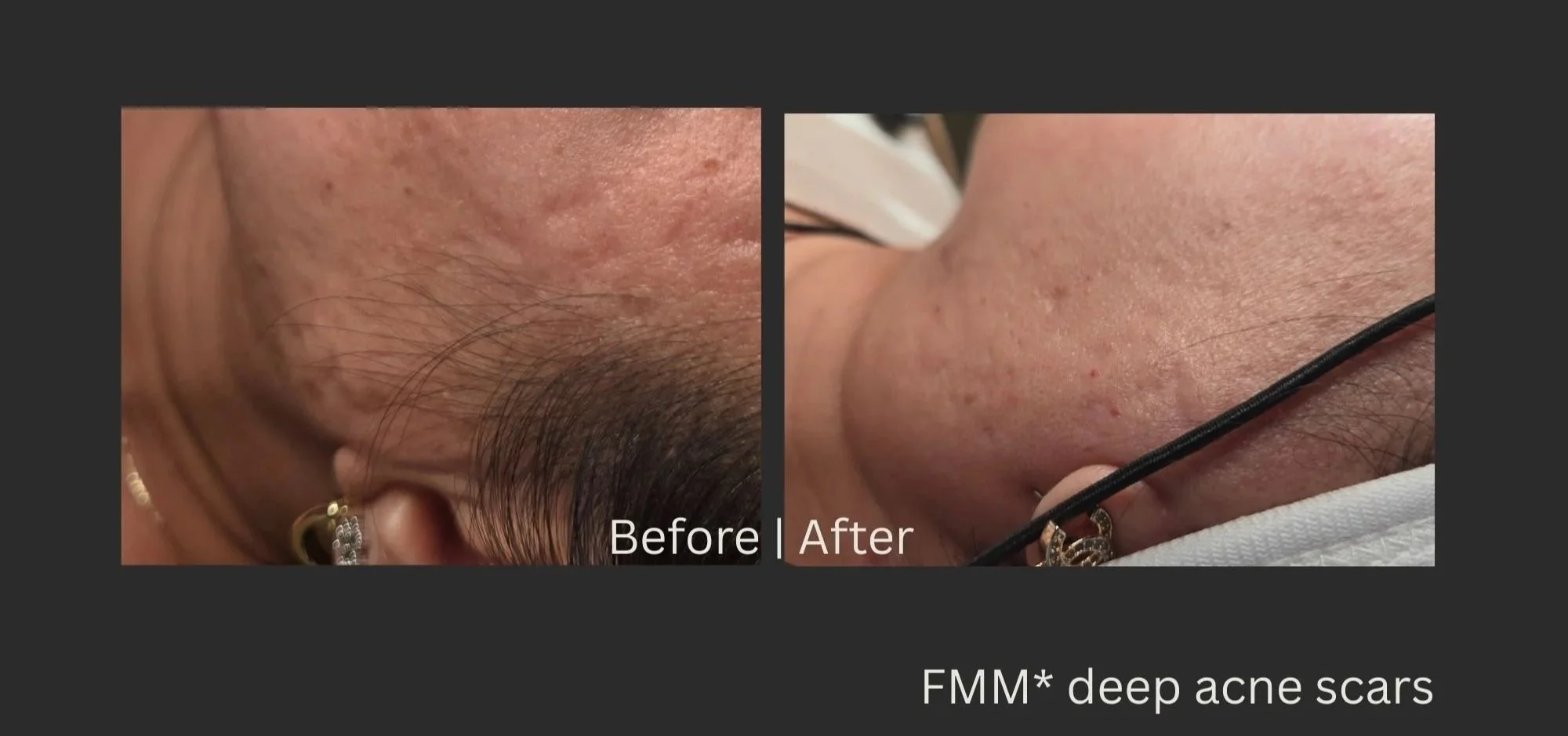
Focused Medical Micro-Needling *FMM
It All Begins Here
Focused medical micro-needling is a targeted, advanced form of microneedling that combines the precision of tattoo-style cartridge needles with a medical-grade serum—Sely Med Ink’s Liquid Gold—to stimulate controlled skin remodelling in specific problem areas.
How it works
Precise needle delivery: Tattoo cartridges allow for consistent needle depth and density, enabling targeted work on deep acne scars, stubborn lines, and localized wrinkles without treating unnecessary surrounding tissue.
Controlled micro-injury: The needles create micro-channels in the dermis. These controlled micro-injuries trigger the skin’s natural healing response—collagen and elastin production—resulting in firmer, smoother skin over time.
Medical-grade serum infusion: Liquid Gold is applied during the procedure and delivered into the micro-channels. Its formulation is designed for clinical use to enhance healing, boost hydration, and support collagen synthesis for better outcomes than needling alone.
Benefits
Targeted results: Ideal for deep acne scars, pronounced lines and wrinkles, and other focal textural concerns.
Greater consistency: Tattoo cartridges provide reproducible needle penetration and patterning, improving treatment predictability.
Enhanced product absorption: Micro-channels allow Liquid Gold to penetrate more deeply and act where it’s most needed.
Minimal downtime: Compared with more invasive procedures, focused micro-needling provides meaningful improvement with a controlled recovery period.
Safety and expertise
Medical-grade equipment and serum: Using clinical-grade cartridges and “Liquid Gold” serum ensures safety and efficacy when administered correctly.
Knowledge-based practice: Proper assessment of skin type, scar depth, and treatment goals is essential. Specialised training in needle selection, depth settings, and sequencing reduces risk and maximizes results.
Aftercare: Post-treatment care is important to support healing, reduce infection risk, and optimise outcomes—this includes gentle cleansing, sun protection, and following clinician instructions on topical use.
Who is a good candidate
Clients with deep acne scarring, creases or wrinkles not fully responsive to topical treatments.
Individuals seeking targeted improvement without the recovery associated with more invasive resurfacing.
Candidates should be medically screened to rule out contraindications (active infection, certain skin conditions, or recent isotretinoin use).
Typical course and expectations
Multiple sessions are usually required, spaced according to skin response and treatment intensity.
Gradual improvement in texture and firmness is seen over weeks to months as collagen remodels.
Combining focused micro-needling with other modalities (where appropriate) can enhance overall results.
At our clinic, focused medical micro-needling using tattoo cartridges and Liquid Gold is delivered within a knowledge-based framework to ensure safe, targeted, and effective outcomes for deep scarring and lines.
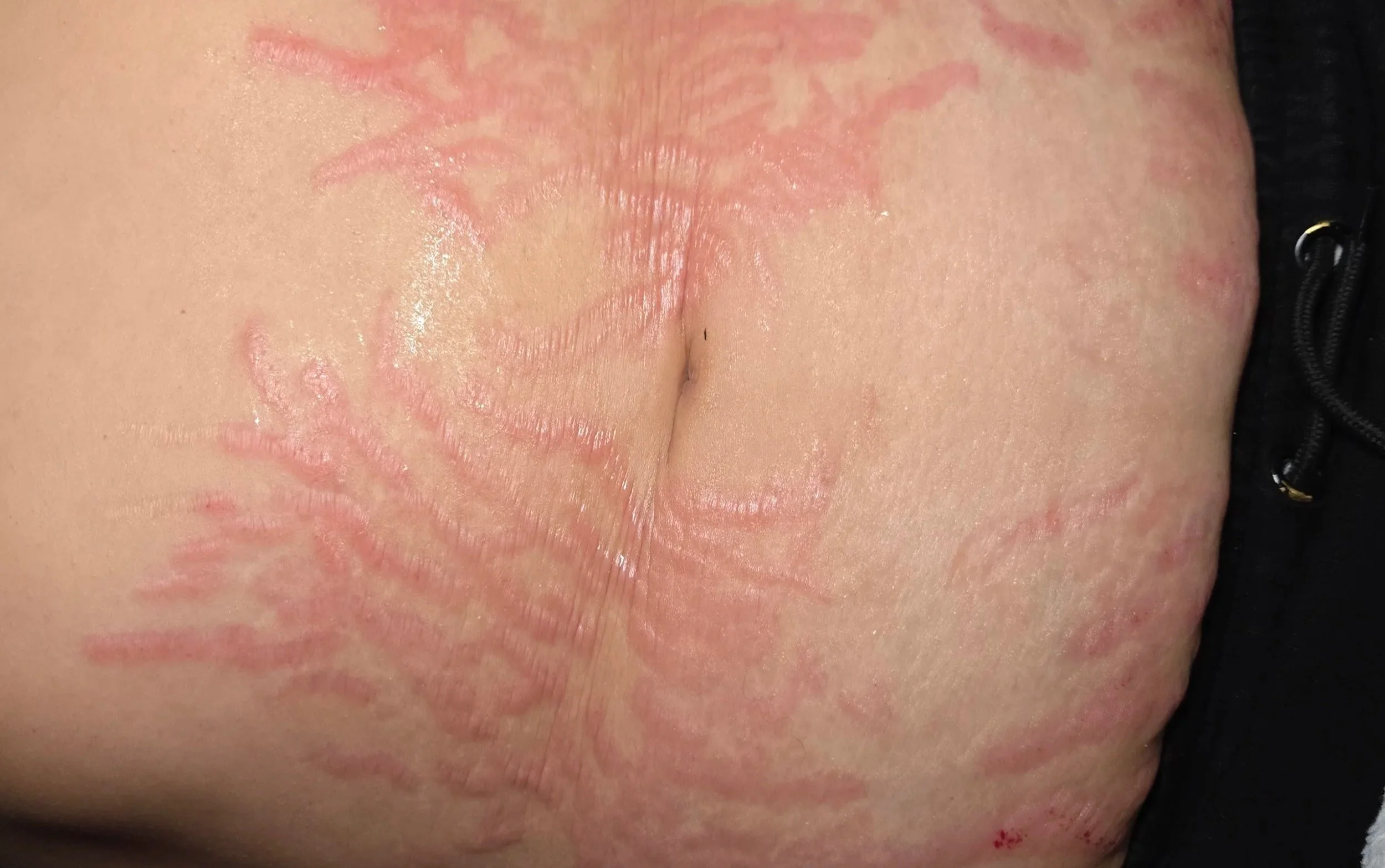
Inkless Scar and Stretchmark Rejuvenation
It All Begins Here
Inkless scar and stretch mark rejuvenation is a non-invasive, needling-based treatment that remodels scar and stretch mark tissue without using pigment. The procedure uses controlled micro-injury and specialised devices (such as fractional radiofrequency or insulated microneedling tips) combined with topical serums or platelet-rich plasma to stimulate collagen and elastin production, flatten raised scars, soften depressed scars, and improve skin texture and colour contrast. The goal is structural and textural improvement rather than tattooing or camouflage.
Who is the ideal candidate
Adults in good general health with realistic expectations.
People with acne scars, surgical scars, keloids/hypertrophic scars, stretch marks (striae alba or striae rubra), or texture irregularities who want improvement in appearance and skin quality.
Those who prefer a non-ablative approach with minimal downtime and lower risk of pigmentation changes.
Candidates who have previously not tolerated or achieved desired results with topical treatments alone.
People with darker skin types who are concerned about post-inflammatory hyperpigmentation from laser resurfacing.
What makes inkless rejuvenation better than laser and traditional microneedling
Lower risk of pigment changes: Non-ablative needling approaches and insulated devices limit heat and epidermal damage, reducing the risk of post-inflammatory hyperpigmentation, which is particularly important for Fitzpatrick skin types IV–VI.
Targeted dermal remodelling: Devices that deliver energy at controlled depths or create microchannels can stimulate collagen remodeling precisely in the dermis where scars and stretch marks form, improving texture and depth more effectively than superficial treatments.
Reduced downtime and discomfort: Compared with ablative lasers, inkless techniques usually cause less redness, swelling and crusting, allowing faster return to daily activities.
Safety over delicate areas: The method is often safer for areas where lasers are less desirable (thin skin regions, recent tan, or areas with pigment concerns).
Versatility: Treatments can be combined with topical growth factors, PRP, or specialised serums during the session to boost results and support healing — something not always practical with laser devices.
Fewer contraindications: Some clients who cannot have laser due to recent sun exposure, certain medications, or skin type may still be eligible for inkless rejuvenation.
Natural-looking improvement: Results tend to be gradual and focused on skin quality and structure, producing subtle, natural changes rather than surface-only lightening or colour correction.
Limitations and realistic expectations
Multiple sessions are usually required (commonly 3–6 sessions spaced weeks apart) for meaningful improvement.
Complete erasure of deep scars or old wide stretch marks is unlikely; the aim is significant improvement in texture, pliability and appearance.
Results vary by scar type, age, location and individual healing response.
Not a replacement for surgical revision in cases where structural correction is required.
Typical treatment process and aftercare
Consultation and skin assessment to determine scar type, skin tone and best approach.
Treatment may include topical anaesthetic, controlled micro-injury or fractional radiofrequency delivery, and application of serums or exosomes.
Immediate effects: redness and mild swelling for 24–72 hours; some pinpoint bleeding is possible during treatment.
Aftercare: gentle cleansing, moisturiser, sun protection, and avoiding active exfoliants until healed. Follow-up sessions scheduled based on progress.
If you’d like, we can arrange a consultation to assess your scars or stretch marks, review before-and-after examples for similar cases, and propose a tailored treatment plan including expected number of sessions and downtime.
Scar Camouflage- Inked
It All Begins Here
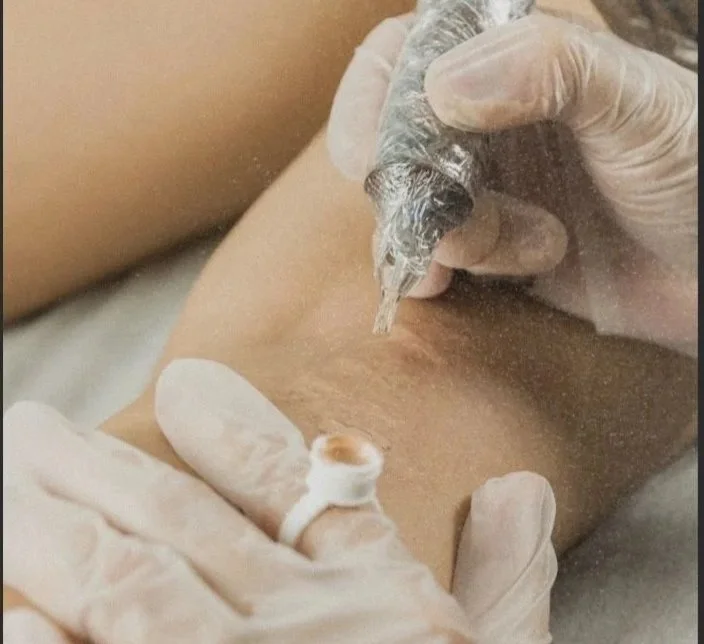
Scar camouflage is a specialized cosmetic tattoo technique that uses pigment matched to your surrounding skin tone to visually blend scars into the natural skin surface. It doesn’t remove the scar tissue or change its texture; instead, it reduces the contrast in color and appearance so the scar is less noticeable. The goal is subtle integration — making the scar look like the surrounding skin at a glance.
How scar camouflage works
Color matching: A customized pigment mix is selected to closely match the client’s skin tone and undertones.
Micropigmentation: Tiny, controlled deposits of pigment are placed into the superficial dermis using specialized sterile equipment and techniques.
Layering and blending: Multiple passes and careful shading create a soft transition between the scar and adjacent skin.
Aftercare and touch-ups: Healing and pigment settling are managed with a planned aftercare regimen and follow-up sessions for color refinement.
Why scar camouflage is effective
Reduces visual contrast: By matching color, the scar draws less attention.
Immediate aesthetic improvement: Results are visible after healing and can be refined over follow-up appointments.
Minimally invasive: Compared with surgical revision, camouflage is lower risk, with shorter recovery.
Works across scar types: Can help with hypopigmented scars, some traumatic scars, surgical scars, burns (depending on severity), and stretch marks that present as lighter or darker lines.
Best client profile for scar camouflage (set-type focus)
Stable scar: The scar is fully healed and matured (usually at least 12–18 months post-injury or surgery). Active healing, keloids that are still changing, or inflamed scars are not suitable.
Hypopigmented or dyschromic scars: Scars lighter than surrounding skin often respond best because pigment can be added to match tone.
Flat or slightly indented scars: Surface texture should be relatively even; very raised keloids or deep hollows may require other treatments first- Inkless Skin Camouflage.
Realistic expectations: Clients seeking reduction in visibility rather than complete erasure. Best results are subtle and natural-looking camouflage, not full disappearance.
Good overall skin health: No active skin infections, uncontrolled skin conditions in the area, or history of problematic wound healing.
Commitment to aftercare and touch-ups: Clients willing to follow instructions during healing and return for follow-up sessions to refine color.
Fitzpatrick skin type considerations: Skilled color matching matters across all skin tones; clients with darker skin may require particular expertise to avoid unwanted pigment changes.
Non-smoking or willing to pause smoking: Smoking can impair healing and pigment retention.
Informed consent and realistic timeline: Understanding that some pigments may fade over time and periodic maintenance may be needed.
When scar camouflage may not be appropriate
Active or hypertrophic/keloid scars that are still evolving.
Very textured scars where texture correction is the priority.
Scars with severe contracture affecting function.
Clients seeking complete elimination rather than reduction.
Summary Scar camouflage is a targeted micropigmentation approach that blends scars into surrounding skin by matching color and softening contrast. The best clients are those with mature, stable, primarily color-different scars (especially hypopigmented or mildly indented), good skin health, realistic expectations, and readiness to follow aftercare and maintenance.
Acne Scar Treatment A.S.E. Acne Scar Eraser
It All Begins Here
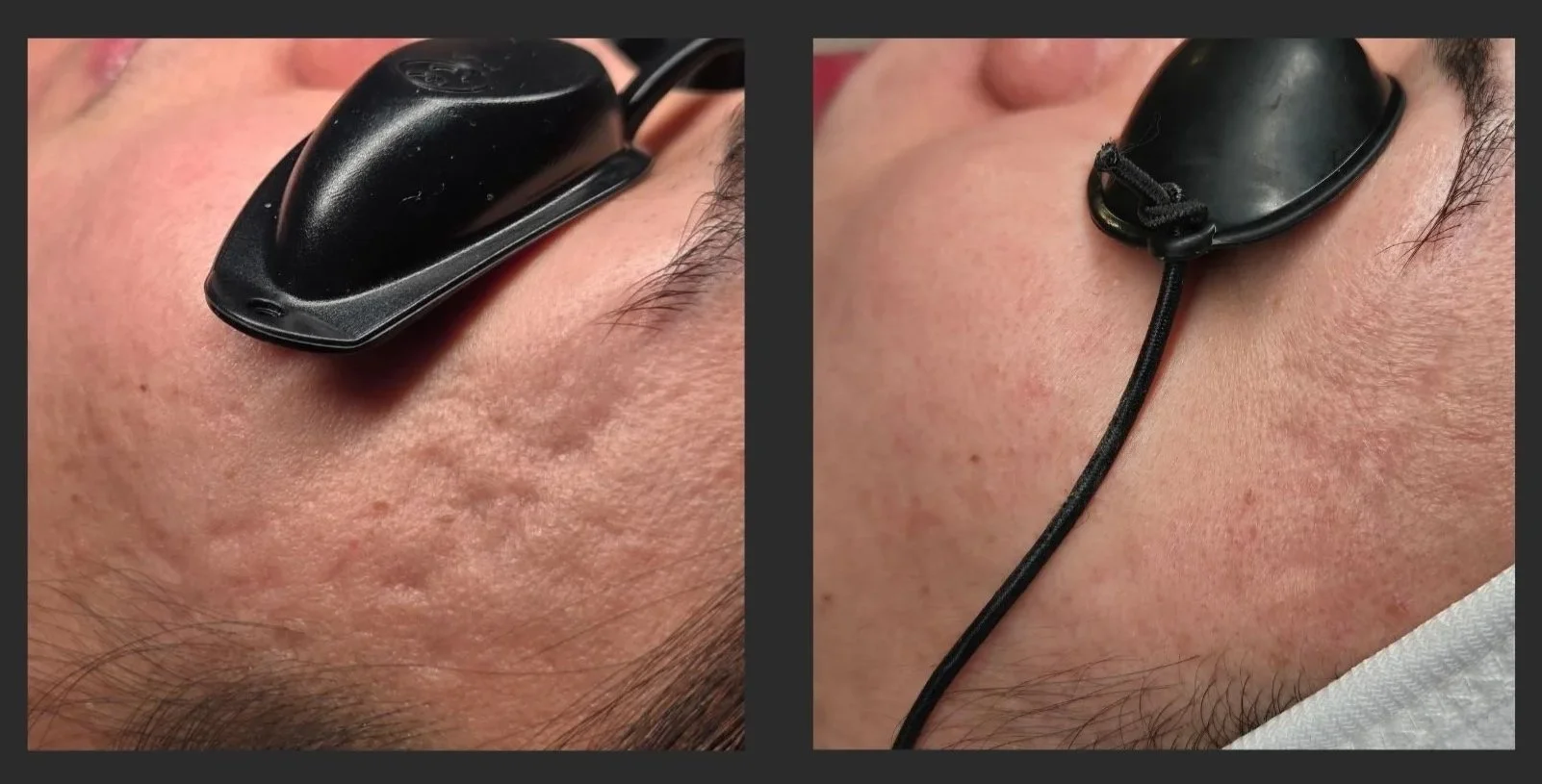
Focused medical microneedling is often superior for treating acne scars—particularly deep, atrophic scars—because it directly stimulates the skin’s natural repair mechanisms in a controlled, targeted way. Key reasons it outperforms many other treatments:
Controlled collagen remodelling
Microneedling creates micro-injuries through the full thickness of the dermis in precise patterns. This triggers a strong, natural wound-healing response: increased fibroblast activity, new collagen (types I and III), and elastin production. For deep atrophic scars, this dermal remodelling restores volume and structural support from within rather than simply resurfacing the epidermis.
Depth and precision
Medical devices allow clinicians to set needle depth and pattern to reach the bottom of deep scars without unnecessary damage to surrounding tissue. That targeted reach is essential for tethered boxcar and rolling scars where the problem lies deep in the dermis. Superficial treatments (chemical peels, superficial lasers) often can’t reach the deep scar base effectively.
Minimal collateral damage
Unlike ablation (fully ablative lasers or aggressive chemical peels) that remove large areas of epidermis and risk pigmentation changes and prolonged downtime, microneedling preserves the epidermal barrier. This reduces risk of post-inflammatory hyperpigmentation (important for darker skin tones) and shortens recovery.
Improved scar contour and pliability
By re-orienting collagen in a more organised pattern and increasing dermal thickness, microneedling softens edges of atrophic scars, improves contour, and increases skin elasticity. This reduces the tethering that causes depressed appearance.
Safer for a wider range of skin types
Because microneedling doesn’t rely on thermal injury to the same extent as many lasers, it’s safer for Fitzpatrick skin types IV–VI, with lower risk of dyspigmentation and scarring from treatment itself.
Synergy with adjuncts for enhanced outcomes
Medical microneedling can be combined safely with topical serums, platelet-rich plasma (PRP), growth factors, or vitamin-based delivery to enhance collagen stimulation and healing. This “drug delivery” advantage increases therapeutic effect at the dermal level where it’s needed.
Repeatable with predictable incremental improvements
Treatment protocols are typically spaced to allow progressive dermal rebuilding. Each session produces measurable improvement in depth and texture of scars without cumulative surface damage that might occur with repeated aggressive resurfacing.
Lower complication profile and downtime compared with aggressive resurfacing
Patients generally experience shorter, predictable downtime—redness and mild swelling for a few days—versus the prolonged healing and risk profile of full ablation or deep chemical reconstruction.
When other treatments may still be appropriate
Subcision is useful for very deep, tethered rolling scars; combining subcision with microneedling often yields superior contour correction.
Fractional non-ablative and ablative lasers can be effective for texture and pigment but carry higher risks for darker skin and often require longer recovery.
Fillers provide immediate volume for deep atrophic areas but are temporary and don’t stimulate lasting dermal regeneration.
Conclusion For deep acne scars, focused medical microneedling addresses the root problem—dermal volume loss and disordered collagen—by inducing controlled, targeted collagen remodelling with lower risk and downtime compared with many alternative modalities. Its depth control, safety across skin types, compatibility with adjunctive therapies, and ability to produce lasting structural improvement make it a leading option for improving deep atrophic acne scarring.